Why Module Programming Matters After Any Major Car Repair
Replacing a control module without correct programming is like fitting a new brain without any memories. Here's why module programming is one of the most critical steps in any major vehicle repair.
Why Module Programming Matters After Any Major Car Repair
Modern vehicles contain dozens of electronic control modules — the ECU managing engine performance, the BCM controlling body functions, the ABS module managing braking, the airbag module protecting occupants and many more. When any of these modules requires replacement after a repair, simply fitting the new part is not enough. Without correct programming and coding, a replacement module will not function — and in many cases, the vehicle won't operate at all.
At National AutoTec, we specialise in OEM module programming and coding across all vehicle makes and models in Melbourne. Here's why module programming is one of the most critical and often misunderstood steps in modern vehicle repair.
What Is a Control Module?
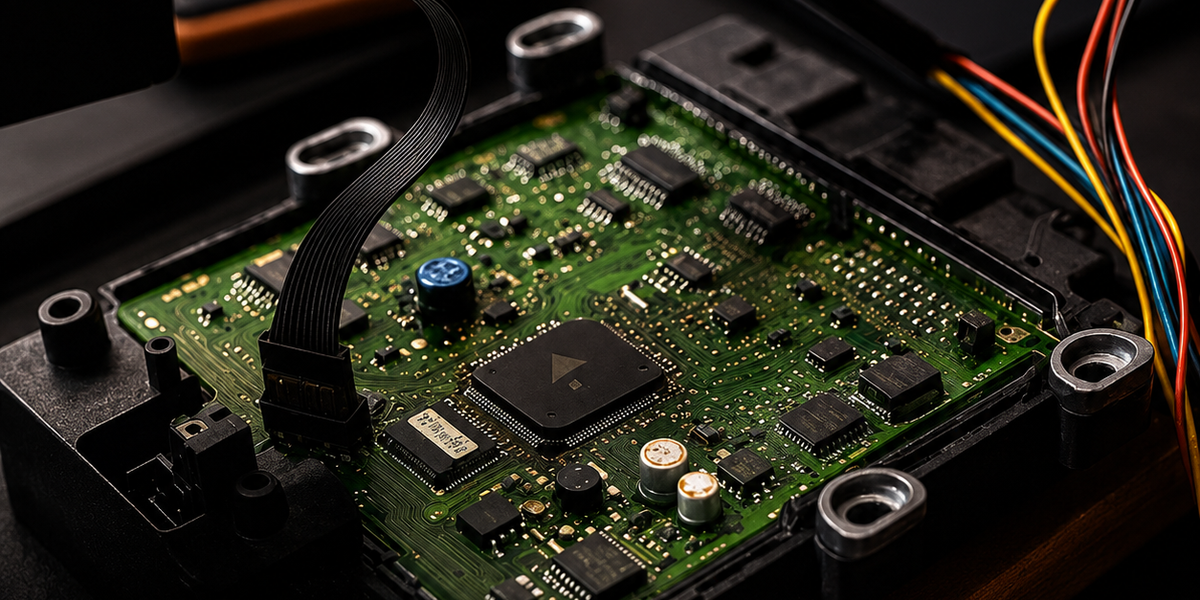
A control module — also known as an ECU, ECM or simply a computer — is a dedicated electronic control unit managing a specific vehicle system. Modern vehicles can contain anywhere from 30 to over 100 individual control modules, including:
- ECU — Engine Control Unit, managing fuel injection, ignition timing and emissions
- BCM — Body Control Module, managing lighting, locking, windows and comfort systems
- TCM — Transmission Control Module, managing automatic gearbox behaviour
- ABS Module — managing anti-lock braking and traction control
- Airbag Module — managing the entire SRS safety system
- Instrument Cluster — displaying vehicle information and warning systems
- TPMS Module — managing tyre pressure monitoring
- Parking Module — managing park assist and reversing camera systems
- Door Modules — managing individual door functions
Each of these modules contains software programmed specifically to the vehicle's configuration, options and specifications.
Why Does a Replacement Module Need Programming?
When a new module is purchased — whether from a dealership or aftermarket supplier — it contains either blank software or generic software that is not configured to your specific vehicle. To function correctly, it must be programmed with:
Vehicle Specific Software The module's software must match the exact specification of your vehicle — including engine type, transmission type, market specification and option codes. Incorrect software causes malfunctions, warning lights and in some cases complete system failure.
VIN Coding Most modern modules must be coded to the vehicle's VIN — the unique identification number that identifies your specific vehicle. Without VIN coding, the module will not communicate correctly with the rest of the vehicle's electronic systems.
Security Matching Modules involved in vehicle security — immobilisers, key systems and engine management — must be security matched to the vehicle's existing security systems. Without security matching, the vehicle may not start at all.
Variant Coding The module must be configured with the correct variant coding — telling it exactly what options and features the vehicle is equipped with. Incorrect variant coding causes incorrect operation of features and persistent warning lights.
Calibration Data Some modules — particularly transmission modules and steering modules — require specific calibration data to be loaded after installation. Without correct calibration data, operation is degraded and warning lights persist.
What Happens Without Correct Programming?
The consequences of a replacement module that hasn't been correctly programmed range from minor inconvenience to complete vehicle immobilisation:
- Warning lights — persistent fault codes and warning lights that won't clear
- Limited functionality — features that don't work correctly or at all
- Communication errors — the new module fails to communicate correctly with other modules on the network
- Vehicle immobilisation — the vehicle won't start or enters a restricted operation mode
- Safety system failure — incorrectly programmed safety modules may not function correctly in an emergency
In a workshop environment, the temptation to fit a replacement module and hope it works is understandable — but with modern vehicles, it simply doesn't. Professional programming is not optional — it's essential.
Common Scenarios Where Module Programming Is Required
After Collision Repair Post-accident repairs frequently involve module replacement — airbag modules, BCMs, sensor modules and others. Every replaced module requires programming before the repair can be considered complete.
After Battery Replacement on European Vehicles BMW, Mercedes, Audi, Volkswagen and Volvo vehicles require battery registration after every battery replacement. Without registration, the vehicle's charging system doesn't recognise the new battery — leading to premature battery failure and charging faults.
After Instrument Cluster Replacement Instrument cluster replacement requires programming to ensure correct mileage reading, warning system integration and vehicle configuration — a specialised procedure that requires manufacturer grade software.
After Gearbox Replacement Automatic transmission replacement requires transmission module coding to the vehicle's specific calibration data — without which shift quality is degraded and transmission warning lights persist.
After ECU Replacement ECU replacement is one of the most complex programming tasks — requiring VIN coding, security matching, variant coding and in many cases immobiliser synchronisation. Without correct programming, the vehicle will not start.
What Equipment Does Professional Module Programming Require?
Professional module programming requires manufacturer approved software and hardware — not generic aftermarket scan tools. At National Auto-Tec, we use:
- ISTA — BMW manufacturer programming software
- XENTRY/DAS — Mercedes-Benz manufacturer software
- ODIS — Volkswagen Group manufacturer software (VW, Audi, Porsche, Skoda, SEAT)
- IDS — Ford manufacturer software
- Techstream — Toyota and Lexus manufacturer software
- GDS2/MDI — General Motors manufacturer software
- Autel MaxiSys — covering a broad range of makes and models
Using manufacturer grade software ensures programming is carried out to OEM specifications — not approximated by aftermarket tools that may not support the full range of programming functions required.
Module Programming at National Auto-Tec
At National Auto-Tec, we provide comprehensive module programming and coding services across Melbourne — covering all major vehicle makes and models including prestige and European vehicles. Our mobile service brings manufacturer grade programming capability directly to your workshop, panel shop or location.
Services include:
- ECU programming & coding
- BCM programming & coding
- ABS module programming
- Gearbox & transmission module coding
- Instrument cluster programming & transfer
- Airbag module programming
- Battery registration & coding
- Door & mirror module coding
- Module initialisation, transfer & duplication
- OEM software updates & reflashing
All programming is carried out using manufacturer approved software and documented with a professional service report.
Call us on 03 9969 3604 or book online today.