What Does EV & Hybrid High Voltage Servicing Actually Involve?
EV and hybrid high voltage servicing is a specialist field that most workshops aren't equipped for. Here's what it actually involves and why choosing the right specialist matters.
What Does EV & Hybrid High Voltage Servicing Actually Involve?
Electric vehicles and hybrids are rapidly becoming mainstream on Melbourne roads — but the specialist knowledge required to service their high voltage systems is still far from mainstream. Most auto electricians and general mechanics are not trained or equipped to work safely on EV and hybrid high voltage systems — and attempting to do so without the right knowledge and equipment is genuinely dangerous.
At National AutoTec, we are Melbourne's dedicated EV and hybrid HV specialist — with EVT licensed technicians carrying out all high voltage work to Victorian safety requirements and manufacturer specifications. Here's exactly what EV and hybrid high voltage servicing involves and why it matters.
What Is a High Voltage System?
In a conventional petrol or diesel vehicle, the electrical system operates at 12 volts — safe enough to touch without serious injury. Electric vehicles and hybrids contain a completely separate high voltage system operating at anywhere from 100 volts to over 800 volts — voltages that are instantly lethal if correct safety procedures aren't followed.
The high voltage system in an EV or hybrid includes:
- The high voltage battery pack
- The inverter — converting DC battery power to AC motor power
- The motor controller
- The on-board charger
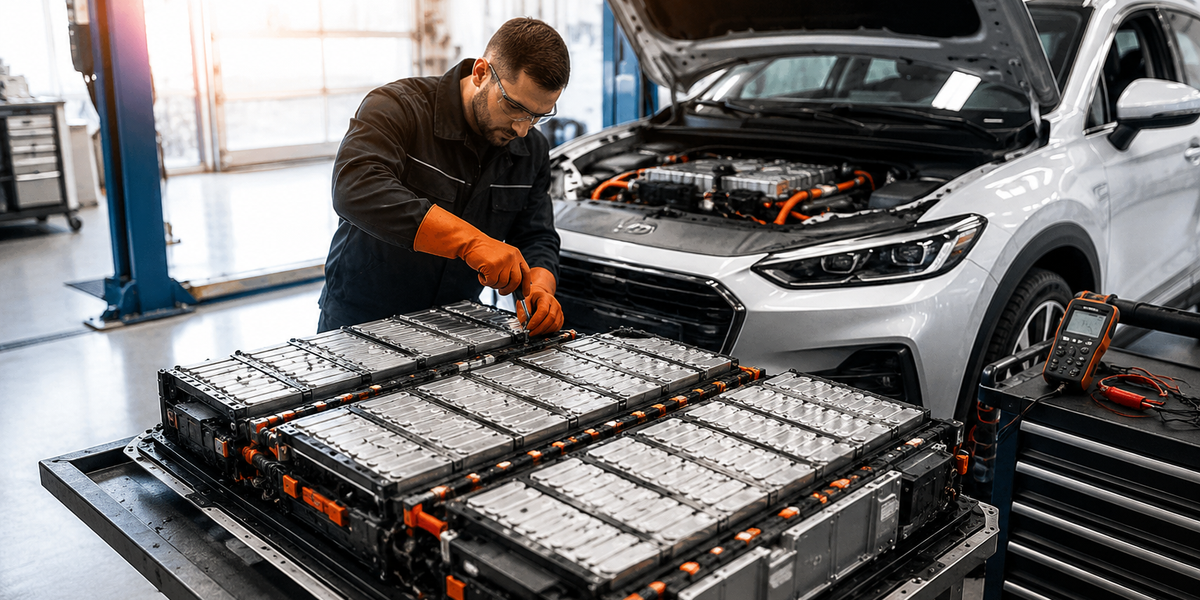
- High voltage wiring harnesses — typically orange coded for identification
- The battery management system
- Thermal management system — regulating battery temperature
- The pre-charge circuit
- High voltage junction boxes and fuses
- The service disconnect plug — the primary safety isolation point
Working on any of these components without correct training, certification and equipment is extremely dangerous and potentially fatal.
What Is an EVT Licence?
In Victoria, technicians working on electric vehicle systems are required to hold an Electric Vehicle Technician licence — issued by Energy Safe Victoria. The EVT licence certifies that the holder has completed approved training in EV high voltage safety procedures and is authorised to carry out EV and hybrid high voltage work in Victoria.
At National Auto-Tec, all EV and hybrid high voltage work is carried out by our EVT licensed technician — ensuring every procedure meets Victorian regulatory requirements and manufacturer safety specifications. When choosing an EV specialist, always verify that your technician holds a current EVT licence.
What Is Depower & Reinitialise?
Before any repair work involving EV or hybrid high voltage components can begin, the high voltage system must be safely isolated — a procedure known as depower or HV isolation. This process involves:
- Confirming the vehicle is in a safe state for HV work
- Removing the service disconnect plug — the primary isolation point
- Verifying HV system isolation using approved HV metering equipment
- Confirming zero voltage across all HV components before work begins
- Applying lockout/tagout procedures to prevent inadvertent re-energisation
After repairs are completed, the reinitialise procedure reverses this process — safely restoring the HV system to operational condition and verifying correct function before the vehicle is returned to service.
Depower and reinitialise procedures are required before and after any repair involving HV components — including battery replacements, inverter repairs, HV wiring work and post-accident HV inspections.
HV Battery Health Reports
The high voltage battery is the most expensive component in any EV or hybrid — and its condition directly affects the vehicle's range, performance and value. Over time, EV batteries degrade — losing capacity and range as individual cells age and deteriorate.
An HV battery health report assesses:
- State of health — overall battery capacity as a percentage of original specification
- Remaining capacity — actual usable energy storage in kWh
- Cell balance — the balance between individual cells within the battery pack
- Cell degradation — identifying cells that have degraded significantly compared to the pack average
- Charging and discharging performance — assessing battery performance under load
A battery health report is essential for:
- Pre-purchase inspections — knowing the true condition of a used EV battery before buying
- Insurance assessments — documenting battery condition after an incident
- Fleet management — monitoring battery health across an EV fleet
- Warranty assessments — documenting battery degradation for manufacturer warranty claims
Post-Accident HV System Inspection
As EVs and hybrids become more common in smash repair shops, the need for post-accident HV system inspection is growing rapidly. After any collision involving an EV or hybrid:
- The HV system must be assessed for damage before repairs commence
- HV wiring and connectors must be inspected for damage
- The battery pack must be assessed for physical damage and thermal events
- A formal HV safety clearance must be issued before the vehicle can be repaired
- A post-repair HV inspection must confirm the system is safe before the vehicle returns to road
At National Auto-Tec, we provide formal HV system inspection reports accepted by all major insurers — an increasingly essential service as EVs become a significant proportion of collision repair work across Melbourne.
Pre-Purchase EV & Hybrid Inspections
Purchasing a used EV or hybrid without a professional inspection is a significant financial risk. Battery degradation, HV system faults and hidden electronic issues are impossible to detect without specialist equipment — and can cost tens of thousands of dollars to rectify.
Our pre-purchase EV and hybrid inspection covers:
- Full HV system diagnostic scan
- HV battery health report with state of health percentage
- Cell balance and degradation analysis
- Full vehicle diagnostic scan and fault code check
- Crash data check — identifying any previous collision history
- Airbag and SRS system check
- Written inspection report with findings and recommendations
Armed with a professional pre-purchase inspection report, you can negotiate with confidence or walk away from a problematic vehicle before it costs you.
EV Charging System Diagnosis & Repair
EV charging faults — slow charging, charging errors or complete charging failure — can be caused by faults in the on-board charger, the charging port, the battery management system or the HV wiring. We diagnose and repair all EV charging system faults — getting your EV charging correctly and efficiently.
Why Choose National Auto-Tec for EV & Hybrid Servicing?
- EVT licensed technicians — all HV work meets Victorian regulatory requirements
- Manufacturer approved equipment — OEM grade HV diagnostic and safety equipment
- Comprehensive service range — from diagnostics and battery health reports through to depower procedures and post-accident inspections
- Mobile service — we come to your location across Melbourne
- Insurance accepted documentation — all reports accepted by major insurers
As Melbourne's EV fleet continues to grow rapidly, specialist HV servicing is no longer a niche requirement — it's an essential service for any vehicle owner, fleet operator or insurer managing modern EVs and hybrids.
Call National AutoTec on 03 9969 3604 or book online today.